Business Keynote Speaker in Australia: How to Choose One Who Gets Results
It then explains where Zaffar Khan, a business speaker, author and mentor, fits, and what to include when you enquire through the speaking page.
28 OCTOBER 2026 · 7 MIN READ · BY ZAFFAR KHAN
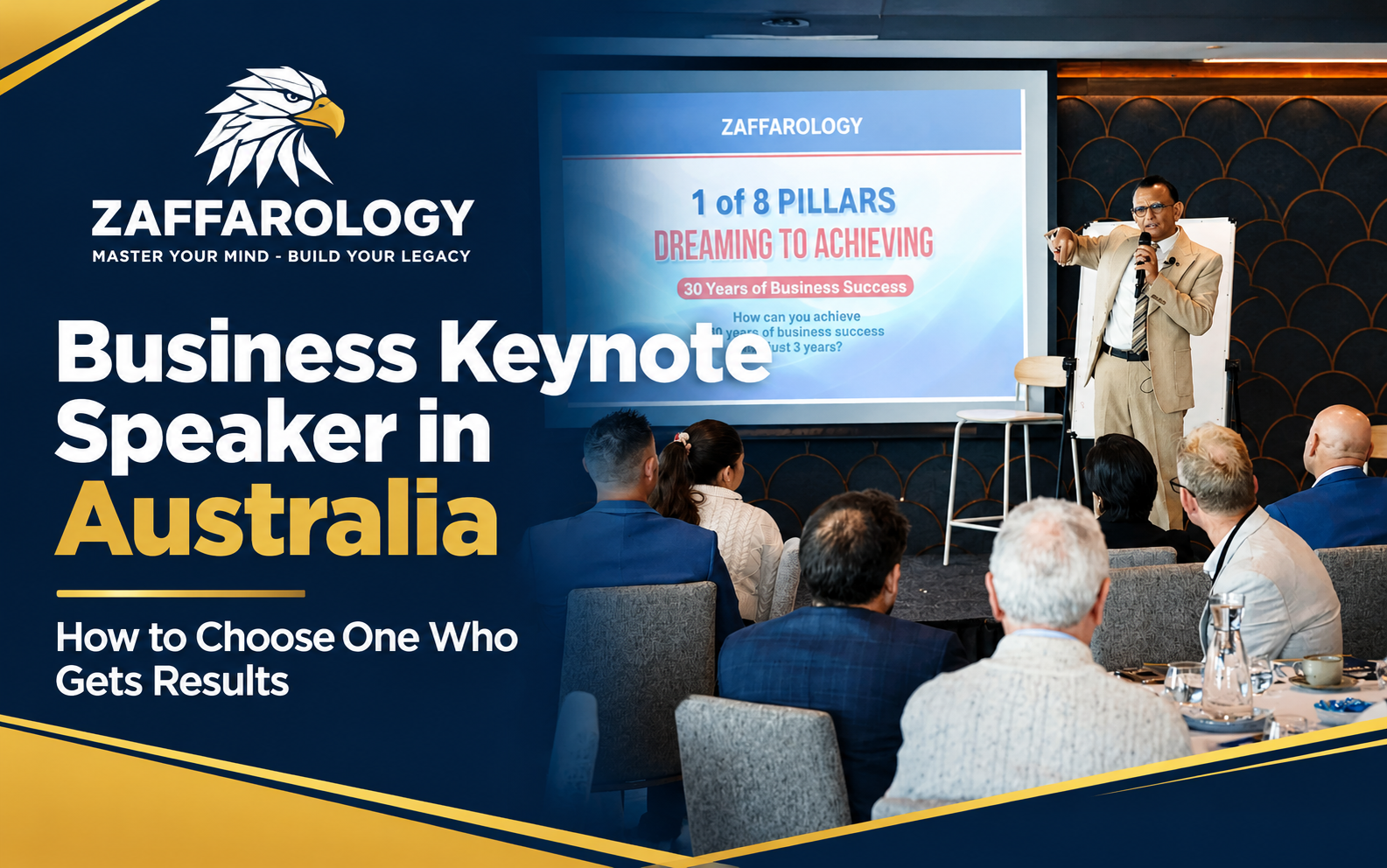
A forty-five minute business keynote can carry an entire event. A good one sends people back to work with a plan. A poor one earns polite applause and leaves the agenda exactly as it was. For organisers of conferences, franchise gatherings, small business forums and corporate training days, the choice of business keynote speaker is one of the few decisions that shapes what the audience does afterwards.
This guide walks through how to pick one: defining the result first, deciding between practical and motivational talks, matching topics to your audience, asking the right questions before you book, and checking whether the talk worked. It then explains where Zaffar Khan, a business speaker, author and mentor, fits, and what to include when you enquire through the speaking page.
This guide walks through how to pick one: defining the result first, deciding between practical and motivational talks, matching topics to your audience, asking the right questions before you book, and checking whether the talk worked. It then explains where Zaffar Khan, a business speaker, author and mentor, fits, and what to include when you enquire through the speaking page.
Start with the result, not the speaker
Most bookings begin with a shortlist of names. A better starting point is a sentence: after this session, attendees will do X differently. The Kirkpatrick Model, a widely used framework for judging training, makes the same point. Kirkpatrick Partners advise starting at Level 4, the results you want, and understanding why the program exists before designing anything else.
For a business event, that sentence might read: franchisees will leave with a daily routine they can start on Monday. Or: managers will agree on one accountability habit for their teams. Once it's written down, you can judge every speaker against it, and you'll spot quickly which ones talk about the topic and which ones talk around it.
Practical or motivational: pick the one your audience needs
Motivational talks lift energy for an afternoon. Practical talks give people a method to apply, and they suit audiences who already have drive but lack structure. Neither is better in every setting. A kick-off for a new sales team may need energy first, while a room of experienced owners probably needs tools.
Zaffar's speaker page puts his talks on the practical side of that line, built around execution, discipline and systems. Whatever speaker you consider, test the pitch with one question: what will someone in the room be able to do on Monday morning that they couldn't do on Friday?
Match the topic to the room
The speaking page lists eight topics. They're titles rather than abstracts, so ask for an outline of any talk you shortlist. As a starting point, here's how they could suit different events.
Small business forums and owner groups tend to want something they can use immediately. The five pillars talk and the session on 90 days of focus fit here, since both are about turning goals into a daily routine. The Australian Bureau of Statistics counted 2.81 million actively trading businesses at 30 June 2026, and only 996,203 of them employ staff. That leaves roughly 1.8 million sole operators, who often value hands-on routines over theory.
Franchise groups and leadership programs wrestle with consistency across sites and people. Topics on building systems that scale, expansion without chaos and leadership lessons from real experience map directly onto those problems.
Conferences and industry events often want a headline talk with a strong hook. The signature session on compressing forty years of business learning into three fills that role, as does the one on how AI and systems will shape small business.
Corporate training days usually need something teams can practise together. The session on discipline, accountability and execution is the closest match.
Questions to ask any speaker before you book
Good speakers expect these, and the answers separate the prepared from the polished.
Can I see a short outline of the talk and its main takeaways?
How do you adapt the content to my audience size and industry?
Is there time for questions, and how do you handle them?
What materials, if any, do attendees receive?
What technical set-up do you need?
Can I speak to someone who has hosted you before?
On references, Zaffar's testimonials page carries written and video feedback, though it comes from attendees of his workshops rather than conference audiences. That's still useful evidence of how he teaches. Read it at the testimonials page and ask for hosts of speaking engagements if you want more.
Brief your speaker in writing
A one-page brief saves a lot of back and forth, and it protects your agenda. Cover the points below and send it at least a few weeks ahead.
State who's in the room: roles, industries, experience level and how many people. Include the result sentence you wrote earlier, so the speaker knows exactly what the session is for. Give the time slot, the run time and what comes before and after it, since a talk that follows lunch needs a different pace from one that opens the day.
Describe the room and the technical set-up: stage or floor, microphones, screens and who runs them. Agree how questions will work, whether that's a facilitated Q and A or roaming microphones. Flag any recording, photography or livestreaming, and any access needs you already know about. Finish with what happens afterwards, such as a follow-up email to attendees or a link to further resources, so the talk connects to something.
Speakers who get a brief like this tend to arrive better prepared, and your audience gets a talk shaped for them rather than a generic keynote.
Plan for access and inclusion
An event only works if everyone can take part. The Australian Human Rights Commission's guide to hosting accessible and inclusive in-person events recommends a public address system when acoustics are poor or 16 or more people attend, and captions and audio description for any videos used in presentations.
Speakers need a briefing too. The Commission's earlier guide on planning accessible events says speakers who use slides or videos should provide the same information in a format people with vision or hearing impairments can use, for example through an oral description of slides, advance copies of materials, captioning or Auslan interpreters. Raise this when you brief your speaker, and ask attendees about access needs when they register.
Measure whether the talk worked
Happy-sheet scores tell you how people felt in the room. They don't tell you what changed afterwards. Kirkpatrick's framework separates reaction, learning, behaviour and results for exactly that reason, and behaviour is the level that shows whether ideas reached the workplace.
A simple version works for most events. Send a two-question survey on the day: what was the most useful idea, and what will you do with it? Follow up after 30 days with one more: what did you actually change? Pair the talk with something that keeps the momentum going. For individual owners, that could be a Zaffarology workshop or the 90 Day Business Transformation Challenge, and for a team, a short habit like a daily huddle introduced right after the session.
About Zaffar Khan as a speaker
Zaffar combines running businesses with writing about them and mentoring other owners. His speaker bio credits him with more than 50 books and a record of building, leading and mentoring businesses in several industries. You can read more on his about page and see his writing on the books page. The podcast and the 5 Pillars page give a feel for how he explains the method before you commit to a booking.
The page names a broad mix of settings, from large conferences to private gatherings of owners.
How to enquire
The speaking page asks for four details: the date, the location, the expected audience size and the topic you have in mind. Send those through the contact page, and add anything else that shapes the talk: the result you want, the run time, whether there'll be a Q and A, and any recording plans. The site also publishes a media and event recording notice, which is worth reading if you intend to film the session.
To see him in action before you decide, the next public workshop is on Friday 6 November 2026 at Logan Hub, and you can reserve a seat online.
Topic descriptions here are suggestions based on the titles listed on the speaking page. Information in this guide is general and educational, and isn't financial, legal or investment advice.
QUESTIONS
Frequently asked
What kinds of events does Zaffar Khan speak at?
The page names settings that run from large conferences and industry events to franchise meetings, local business forums, internal training days, leadership programs and invitation-only owner gatherings.
What topics can Zaffar Khan speak on?
Eight topics are on offer. They include a signature talk on compressing forty years of business learning into three, an overview of the 5 Pillars, and sessions on accountability and execution, scalable systems, growing without chaos, leadership lessons, the role of AI in small business, and ninety days of concentrated focus.
Are the talks practical or motivational?
They are positioned as practical. The speaking page describes talks built around real decisions owners face, with an emphasis on execution rather than slogans, so audiences leave with something to act on.
How do I book Zaffar Khan to speak?
Submit a speaking enquiry through the contact page on the Zaffarology website. The page asks for the date, the venue location, how many people will attend and the subject you want covered.
What should I include in a speaking enquiry?
Start with the four basics the site asks for: when and where the event is, how big the audience is and what subject you want. It also helps to describe the result you want from the session, the time slot, whether you plan a question-and-answer segment, and whether the event will be recorded.
NEXT WORKSHOP · FRIDAY, 6 NOVEMBER 2026
Achieve 40 years of business success in 3.
KEEP READING
More from the Journal
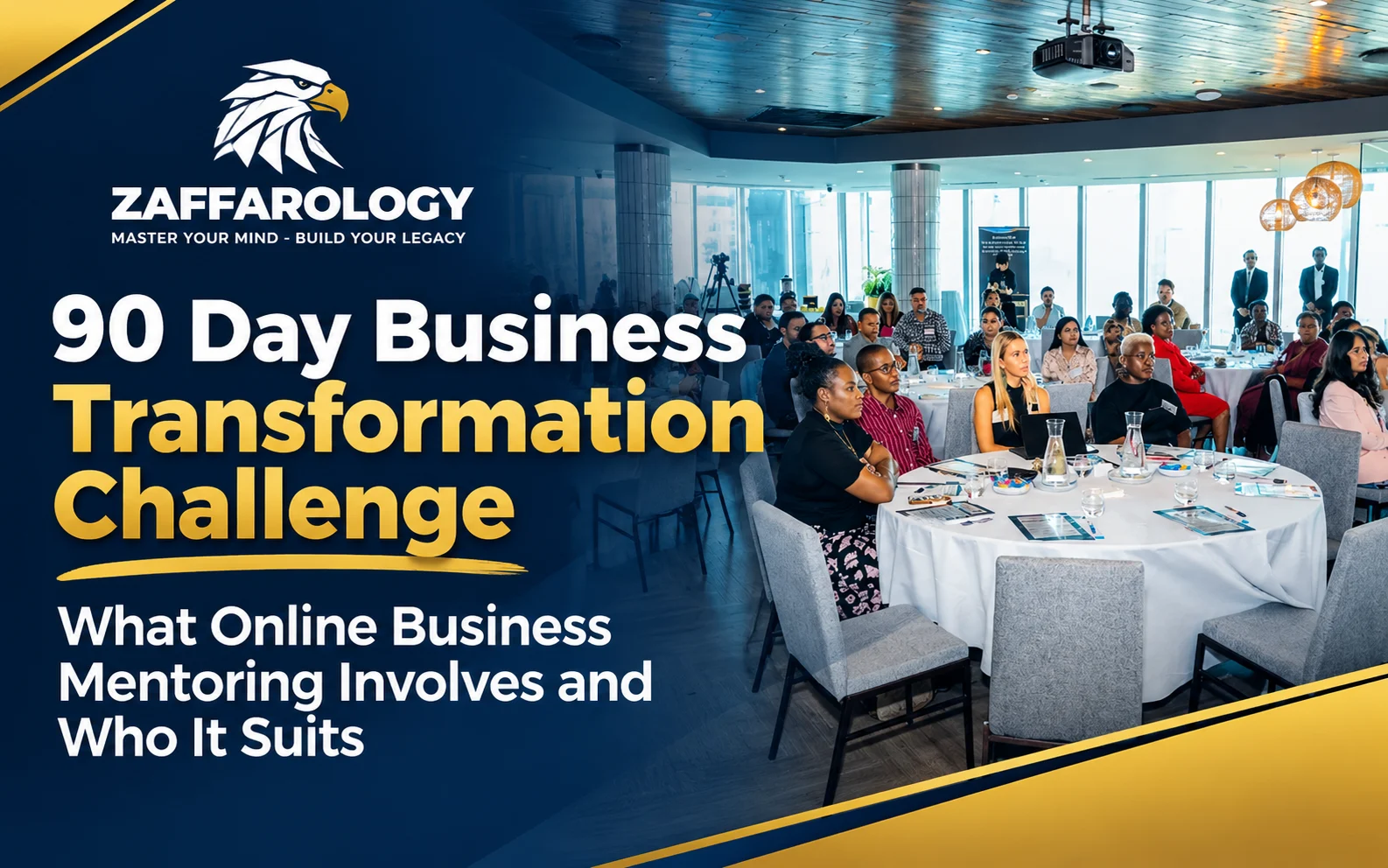
27 OCTOBER 2026 · 7 MIN READ
90 Day Business Transformation Challenge: Who It’s For
Plenty of owners have read the books, saved the webinars and attended the odd seminar.
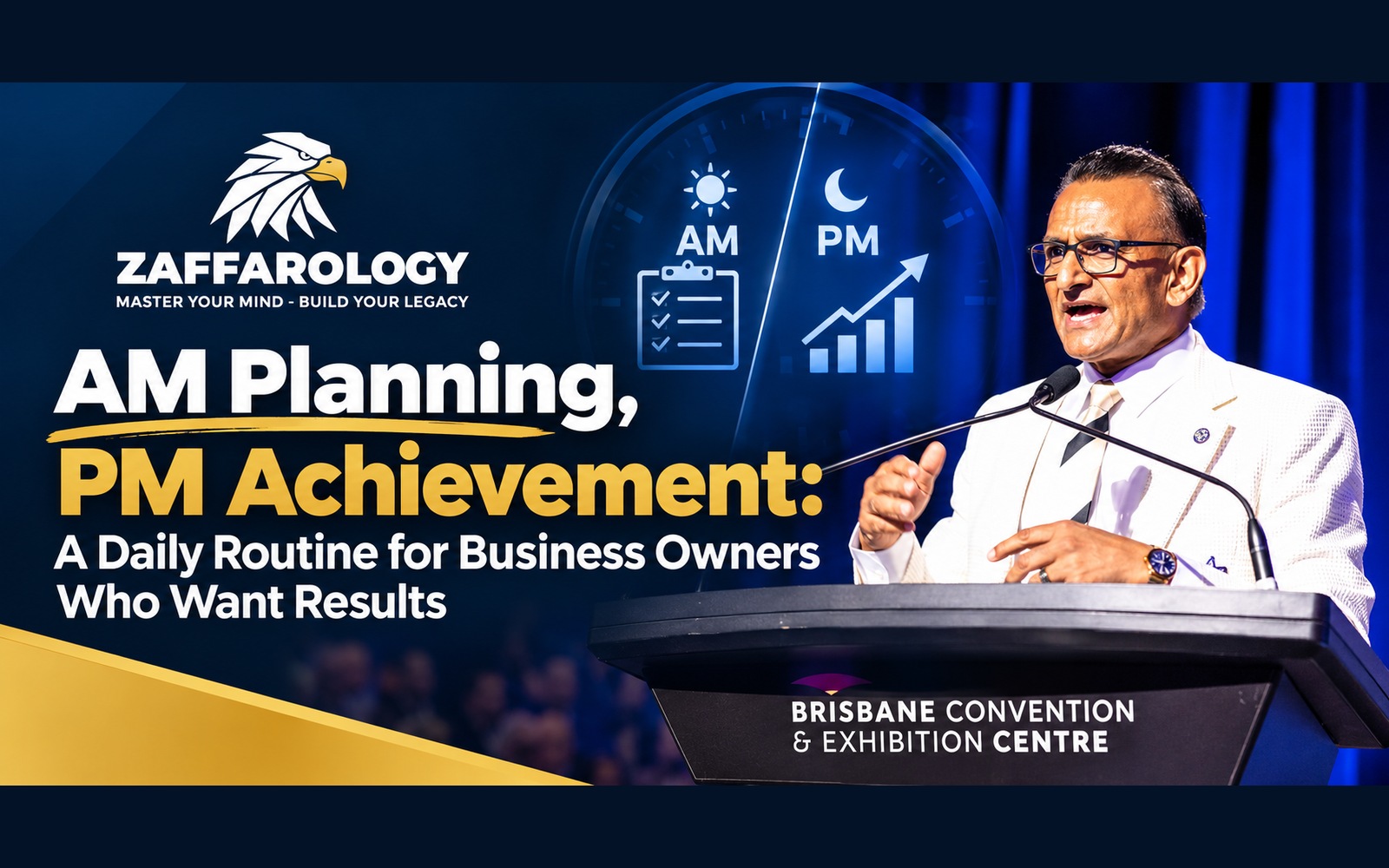
27 OCTOBER 2026 · 8 MIN READ
AM Planning, PM Achievement: A Daily Routine for Business Owners Who Want Results
Phone calls, a supplier problem, two staff questions, a fire nobody saw coming
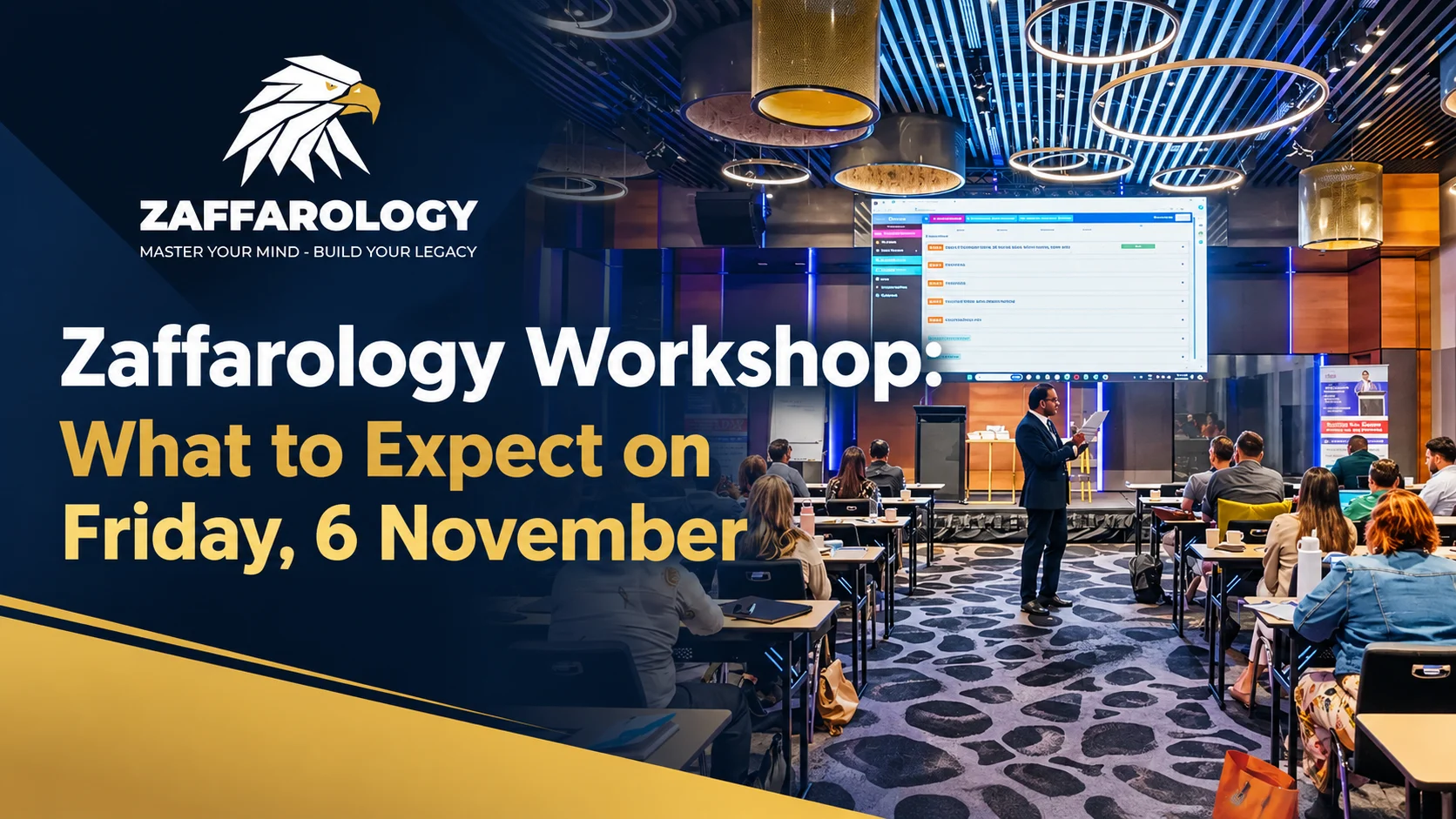
23 OCTOBER 2026 · 4 MIN READ
Zaffarology Workshop, Friday 6 November: What to Expect in One Evening
Zaffarology 1-Evening Workshop: Fri 6 Nov 2026, 6:30-9pm, Logan Hub, QLD. Learn goal setting, systems, AI tools and matchmaking. From $47. Seats limited.