Business Coach vs Business Mentor: Which One Does Your Small Business Need?
Free state programs like Queensland's Mentoring for Growth give you a single session with an experienced owner.
23 NOVEMBER 2026 · 9 MIN READ · BY ZAFFAR KHAN

Two owners walk into the same networking breakfast and say the same thing: "I need some help with my business." The first runs a cleaning company. She knows exactly what her business needs, which is more sales calls, and she keeps putting them off. The second owns a small manufacturing firm and faces a decision he has never made before. He can hire a manager, or he can keep running the floor himself. Both want help, yet they need two different kinds.
That gap sits at the centre of the business coach vs business mentor question. The words get swapped constantly, even by the people who sell the services. This guide separates them, shows where the line blurs, and gives you a practical way to decide which one your small business needs right now.
The short answer
A business coach helps you perform better. The coach asks sharp questions, holds you to a goal and helps you pull answers out of your own head. A business mentor helps you decide better. The mentor has already run a business, so you borrow their experience and avoid some of the mistakes they made.
Most owners need both at different points. The cleaning company owner above needs follow-through, which points toward coaching. The manufacturer needs someone who has hired that first manager and can describe what went wrong, which points toward mentoring. The rest of this article explains how to tell which situation you are in.
What a business coach does
Coaching tends to centre on a specific skill or outcome. According to a Success.com guide to business coaching and mentoring, owners often hire coaches for narrow jobs such as building confidence, handling sales calls, working with team members or generating leads. The coach is paid for a defined period and works on that target.
The method matters as much as the topic. A coach mostly asks instead of telling. You leave a session with a clearer view of your own thinking and a list of actions, not a set of instructions from someone who has been there. This is why a good coach does not need to have run a business like yours. The skill lies in the questioning and the follow-up.
Coaching also has an end point in mind. Westpac's small business guidance notes that coaching may run weekly or monthly until you feel ready to carry on alone, and it names the length of the relationship as the main difference from mentoring.
What a business mentor does
Mentoring leans on lived experience. The HubSpot breakdown of coaching and mentoring describes mentors as people who guide others by sharing their own experiences, knowledge and expertise. If you ask a mentor whether to raise prices, you get a story about the time they raised theirs and what happened to their customers.
In Australia, mentoring has a public face as well. The Queensland Government's business mentoring pages describe one-on-one or small group sessions with experienced advisers who help owners build skills and grow. The state's Mentoring for Growth program offers free 45-minute sessions with volunteer mentors, which tells you something about the model. Mentors often give their time because they remember needing it.
The relationship usually runs longer and looser than coaching. A mentor sees patterns across years, so they can warn you about problems that have not shown up yet. They can also introduce you to people, since a mentor with decades in an industry tends to know suppliers, advisers and potential partners.
Five differences that matter
Where the answers come from
A coach believes the answer already exists in you and works to surface it. A mentor believes the answer exists in their own history and hands it over. Neither belief is wrong, but they suit different problems. If you lack information, questions alone will not help. If you lack nerve or discipline, information alone will not help.
What gets worked on
Coaching usually targets one thing at a time: a sales routine, a difficult hire, a presentation. Mentoring covers the whole business and the person running it, from pricing to succession. When a problem has clear edges, a coach fits. When everything feels tangled, a mentor can help you see which thread to pull first.
How long it lasts
Coaching engagements often have a set length and a goal that signals the end. Mentoring has no natural finish line and can continue for years. Owners sometimes keep one mentor through several stages of the same company.
How the sessions run
Coaching sessions tend to follow a structure: review the last action, set the next one, agree a deadline. Mentoring conversations drift more. You bring whatever is on your mind and the mentor responds. That freedom helps when you do not yet know which question to ask, and it hurts when you need someone to chase you.
Who pays, and how much
Common wisdom says coaches charge and mentors volunteer. The Queensland program shows the second half is true in public schemes, yet plenty of private mentoring is paid, and some coaches work for free inside company programs. Ask about cost and terms early instead of assuming either way.
The line is blurrier than it looks
Tidy comparisons make for good headlines, but practice is messier. A research paper from Oxford Brookes on executive coaching and mentoring argues the boundary is more blurred than the popular story suggests. The usual split puts skills and performance on the coaching side and experience and career knowledge on the mentoring side. The authors challenge that picture.
You can see the overlap in real sessions. A seasoned coach shares a hard-won opinion when you are stuck, and a good mentor stops talking and asks a question that exposes your assumption. So treat the label as a starting point. What counts is what the person does in the room, how they measure progress and whether you leave each session with something to do.
Which one does your business need?
Start by naming the real problem. A few common situations and where each one points:
You know what to do but keep not doing it. Missed follow-ups, stalled projects and a task list that rolls over every week all signal an accountability problem. A coach, or a mentor who runs a strict check-in routine, will help most.
You face a decision you have never made. Hiring a first manager, pricing a new service, opening a second site or planning an exit all reward someone who has been through it. Look for a mentor with relevant experience.
Your business runs on chaos. Owners who answer every question themselves and cannot step away usually need systems, not motivation. A mentor with real operating experience can show you how larger teams stay organised.
You have one skill gap. If selling, public speaking or delegation holds you back, a coach or a short course aimed at that skill will often beat a long mentoring relationship.
Many owners fall into more than one bucket, which is why the Success.com guide notes that experienced owners often keep several mentors and still call on coaches for specific skills. Choosing one now does not lock you out of the other later.
Where Zaffar Khan's mentoring sits
Zaffar Khan's program is called business expansion mentoring, and the draw is experience. His About page describes about 40 years across several industries, including a taxi training centre and a home doctor service he built from the ground up. Owners who want advice from someone who has run large operations will find that background relevant.
The format borrows from coaching, though. The 90 Day Business Transformation Challenge is online and runs for a fixed quarter with limited intake. It includes weekly mentoring calls, a daily AM and PM planning structure and an accountability scorecard. On the site he describes himself as an accountability partner for the length of the program, checking progress every week. A mentor supplies the know-how, and the structure supplies the follow-through that coaching is known for.
That hybrid suits owners who have both problems at once: they lack a few answers and they lack a routine. It suits them less if what you want is open-ended reflection with no advice attached, or if you prefer a relationship with no end date. The method underneath is the 5 Pillars of Zaffarology, and you can read how its parts work in practice in the posts on running a daily huddle and the fortnightly review.
One caution applies to any program like this. Results depend on what the owner does, and the site's earnings and results disclaimer says so. Treat any provider that promises guaranteed outcomes with suspicion, including this one.
Questions to ask before you hire either
Whatever you call the person, put the same questions to them.
Ask what they have actually run and for how long. A mentor's value comes from experience, so vague answers should worry you. Ask how they measure progress, because a coach without a measure cannot tell you whether the work is paying off. Ask what happens in the first month, how often you will speak and what you are expected to do between sessions. Ask for the total cost and what it includes, plus how to leave if the fit is wrong.
Talk to someone who has worked with them. Written praise is easy to collect, and a ten-minute conversation tells you far more. The testimonials page on Zaffar's site is a place to start, though a call with a past client says more than any quote.
Low-cost ways to test the fit
You do not have to commit to a long program to find out how a mentor thinks. Free state programs like Queensland's Mentoring for Growth give you a single session with an experienced owner. Reading a provider's own writing shows whether their approach matches how you work.
With Zaffar, the free 5 Pillars workbook lets you try the goal-setting method on your own business, and the podcast gives you his voice in short episodes. The next one-evening workshop runs on Friday 18 December 2026 from 6:00 pm to 9:00 pm at Logan Hub, and attendees get a chance to ask him questions directly. Several past attendees singled that out as the most useful part. One evening will tell you more about the fit than any sales page.
Where to go from here
Write down the last three things that stalled in your business and label each one as a knowledge problem or a follow-through problem. The split tells you which kind of help to look for first. If the balance tilts toward both, read about the 90 Day Business Transformation Challenge and get in touch with Zaffar to ask whether it fits your business.
QUESTIONS
Frequently asked
Can I have a coach and a mentor at the same time?
Yes, and many owners do. A mentor guides the long view while a coach sharpens one skill or habit. Just make sure each knows the other exists so their advice does not collide.
Is a mentor better than a coach for a new business?
Often, since new owners usually lack information more than discipline. A mentor who has started a company can shorten the learning curve. If the problem is procrastination or confidence, a coach may help more.
Do I have to pay a mentor?
Not always. Public programs use volunteers, while private mentoring is usually paid. Settle the terms in writing before you start.
How long should I stay with one person?
Judge by progress. If you cannot name what has changed after three months, raise it directly. A good coach or mentor will want that conversation.
NEXT WORKSHOP · FRIDAY, 18 DECEMBER 2026
Achieve 40 years of business success in 3.
KEEP READING
More from the Journal

24 NOVEMBER 2026 · 9 MIN READ
Is a Business Coach Worth It? How to Judge the Value Before You Commit
Is business coaching worth it? See what the evidence says, how to calculate your own return, and the questions to ask before you pay for a program.
20 NOVEMBER 2026 · 9 MIN READ
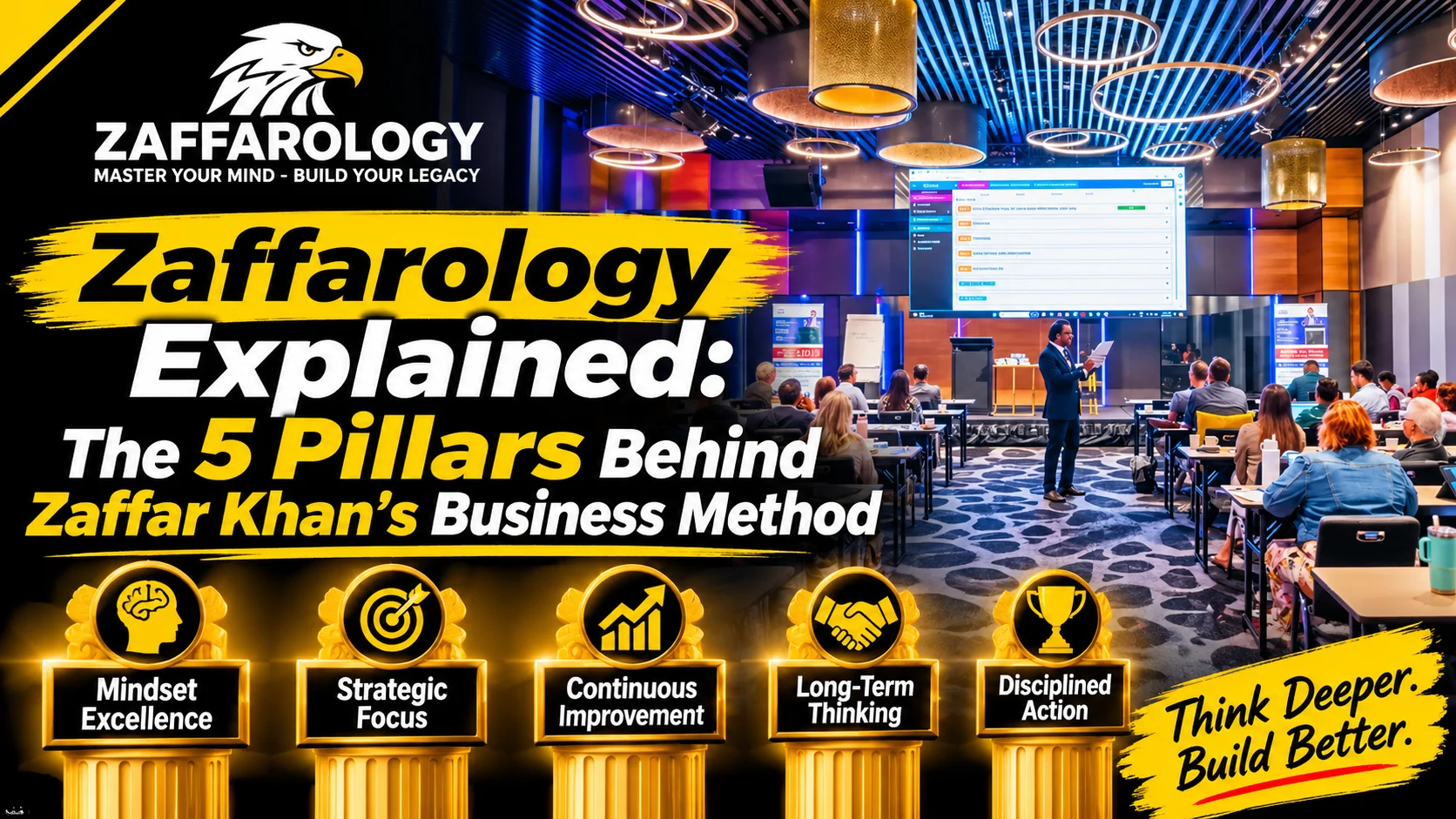
Zaffarology explained: the 5 Pillars behind Zaffar Khan’s business method

19 NOVEMBER 2026 · 6 MIN READ
Start the Year With a 90-Day Business Plan: Why January Is the Right Time to Begin
Plan a 90-day business sprint from January 2027. Learn how to use the new year fresh start, set review dates, count Queensland public holidays.