Is a Business Coach Worth It? How to Judge the Value Before You Commit
Is business coaching worth it? See what the evidence says, how to calculate your own return, and the questions to ask before you pay for a program.
24 NOVEMBER 2026 · 9 MIN READ · BY ZAFFAR KHAN

Sometimes, yes. Whether business coaching is worth it for you depends on three things that have little to do with the coach's reputation: how clearly you define the result you want, how well the person fits your business, and what you do between sessions. A coach can raise your game, but a coach cannot do the work for you.
The question deserves a straighter answer than most coaching websites give. This guide covers what the research says, how to put a dollar figure on the value, which costs people forget, and the questions to ask before you sign anything. It also applies the same test to Zaffar Khan's own program, so you can see how it measures up.
What the evidence says
The research on business and executive coaching is positive but modest. A 2023 meta-analysis in Frontiers in Psychology pooled 20 randomised controlled trials, the most rigorous design available. Its authors note that earlier work using looser designs reported medium-to-large and even very large effects, while the one earlier review limited to randomised trials found effects in the small-to-medium range. In plain terms, the tighter the study, the smaller the payoff it measures.
A summary prepared by a US military health research centre reached a cautious verdict as well. It described the scientific literature on executive coaching as nascent and said more rigorous research is needed to confirm how well coaching works.
The bigger numbers come from the coaching industry itself. The International Coaching Federation reported a median return of seven times the investment for businesses and about 3.44 times for individuals, in a release on its client study. Read those figures with care. They come from a trade body, they rely on what clients reported, and they cover people who were able to calculate a return in the first place. Even the ICF's own guidance on proving the value of coaching admits that other factors always affect results, so the honest label for the data is evidence rather than proof.
Put together, the picture is fair. Coaching tends to help people reach goals they have defined, and the size of the benefit varies a lot from one engagement to the next.
Why results vary so much
Three factors explain most of the gap between a coaching engagement that pays off and one that fizzles.
The first is goal clarity. "Grow the business" gives a coach nothing to hold you to. A target with a number, a deadline and a named owner gives both of you something to check. Zaffar's post on setting business goals that get done breaks this into five parts you can write down before your first session.
The second is fit. A coach who has never run a business like yours may ask good questions and still miss the practical realities. A mentor with deep experience may give excellent advice and push you too little on follow-through. Neither is wrong, but a mismatch with your actual problem wastes money.
The third is you. Coaching moves at the speed of the owner's action. If you skip the tasks agreed in the session, nothing changes, and you pay for the conversation anyway.
How to put a number on it
The ICF defines the return calculation simply: net benefits divided by the cost of coaching. You can run that sum before you buy, using your own figures.
Here is an illustration with invented numbers, since real prices vary widely. Suppose a program costs $6,000 over 90 days. Your goal is to land three extra jobs at $4,000 profit each, which adds $12,000. Subtract the $6,000 cost and the net benefit is $6,000. Divide by the cost and the return comes out at 100 percent. If you land only one extra job, the same sum shows a loss of $2,000. Writing it out shows you the break-even point, and it tells you what you must achieve for the spend to make sense.
Pick one number that matters to your business. It could be new revenue, hours saved, a lower cost per job or a faster payment cycle. A single measure beats a vague list of hopes, because you can check it every week.
Costs people forget
The sticker price is only part of the bill. Your own time counts, since every session and every task you complete has an opportunity cost. If an owner who bills $150 an hour spends four hours a week on coaching tasks, that is a real figure to add. Implementation costs show up too, such as new software, a part-time hire or a redesigned process.
Benefits that do not show up in dollars also deserve a place in the sum, so long as you label them honestly. Clearer priorities, fewer sleepless nights and a team that knows what to do each morning count for something. Just keep them in a separate column from the revenue figures, so soft benefits do not hide a weak financial return.
When coaching is likely worth it, and when it is not
Coaching tends to pay off when you already know your business reasonably well, you have a defined problem or target, and you are willing to change how you work. It suits owners who stall at follow-through, who need an outside voice to challenge their assumptions, or who are stepping into a bigger role than they have held before.
It pays off less when the business is in a cash emergency and basic bookkeeping is missing. A coach cannot fix a business that does not know its own numbers, and an accountant or financial adviser may serve you better first. The same goes for owners hoping someone will take over the thinking. Coaching works with you and does not replace you. Time matters as well, because if you cannot protect a few hours a week for the tasks that come out of each session, the money is better kept for later.
The questions to ask before you sign
Treat the first call as a job interview, with you as the employer. Ask what specific result the coach expects to help you reach and how you will both measure it. Ask what the first month looks like, how often you will meet and what you must do between sessions. Ask who they have worked with that resembles your business and whether you can speak to one of those clients.
Credentials give another signal for coaches. The ICF hiring tips advise confirming each coach's training, professional memberships and credentials. Treat a credential as one signal among several. For a mentor whose value comes from experience, a record of running real businesses counts for more than a certificate. Interviewing more than one candidate also helps. The ICF suggests speaking with several before you decide, and the comparison alone often reveals what you actually want.
Finally, ask for the cost, what it includes, how long the commitment lasts and what happens if the fit is wrong. A provider who answers those clearly and puts them in writing has already told you something useful.
Know your rights as a buyer
In Australia, the consumer guarantees under the Australian Consumer Law cover services, and the ACCC says these guarantees can protect your business when you buy services from other businesses. Services must be provided with due care and skill and be fit for any purpose you have told the provider about. Whether a guarantee applies to a given purchase depends on its price and type, so check the ACCC guidance for your situation.
The fit-for-purpose point has a practical lesson. State the result you want, in writing, before you pay. A coach who knows your expectation and accepts the job has agreed to it, while a vague request leaves little to measure the service against. This is general information and not legal advice.
Red flags worth walking away from
A promise of guaranteed results should end the conversation. No honest provider controls what you do after the session, and the data above shows how much outcomes vary. Pressure to decide today, a refusal to put terms in writing and a lack of anyone willing to speak as a reference are the other warning signs. Large income claims with no disclaimer deserve suspicion too. A fair provider tells you plainly that results depend on your effort.
How Zaffar Khan's mentoring measures up
Apply the same test to the 90 Day Business Transformation Challenge. The program is online with limited intake and runs for a fixed quarter. It includes weekly mentoring calls, a daily AM and PM planning structure and an accountability scorecard. That scorecard matters for your sum, because a measurable record each week lets you check progress against your own target instead of relying on a feeling.
Zaffar presents the program as mentoring and not as credentialed coaching, so the relevant check is his record. His About page describes about 40 years in business, including a taxi training centre and a home doctor service he built, and the testimonials page carries comments from past workshop attendees. Treat both as starting points. The earnings and results disclaimer states that results depend on the owner, which is the honest position and matches what the research shows.
Before applying, run the questions above. Ask for the price and what it covers, what the scorecard tracks, what a typical first month looks like and whether you can speak with someone who has finished the program. Ask for the terms in writing, as you would with any provider.
The method underneath the program is the 5 Pillars of Zaffarology. If January is your planned start, his post on starting the year with a 90-day business plan lays out how to prepare.
Ways to test the fit cheaply
You can learn a lot before spending real money. The free 5 Pillars workbook lets you write goals for your own business using the method, and the podcast gives you a feel for his style in short episodes. The next one-evening workshop runs on Friday 18 December 2026 from 6:00 pm to 9:00 pm at Logan Hub, and attendees can put questions to Zaffar directly. A single evening reveals whether his way of thinking suits you, and it costs a fraction of a program.
Before you book anything
Write down the one number you want to move in the next 90 days, then work out what you would pay to move it. If a provider cannot show how their program connects to that figure, keep looking. When you want to talk through whether a structured program suits your business, get in touch with Zaffar and take your list of questions with you.
QUESTIONS
Frequently asked
How long should I give coaching before judging it?
Ninety days is a common unit, long enough for habits to form. Set checkpoints at 30 and 60 days against the single number you chose, and raise concerns early instead of waiting for the end.
What if I cannot measure the result in dollars?
Pick a proxy you can track, such as hours saved, tasks finished on time or the number of weeks you hit your targets. A proxy you check weekly beats a goal you never measure.
Can I get a refund if it does not work?
That depends on the agreement and on your consumer guarantee rights. Read the terms before paying, ask about refunds directly and keep the written record of the result you asked for.
Is coaching worth it for a very small business?
It can be, because small owners often lack anyone to challenge their thinking. The sum matters more for a small business, since a modest spend is a larger share of revenue, so run the numbers first.
NEXT WORKSHOP · FRIDAY, 18 DECEMBER 2026
Achieve 40 years of business success in 3.
KEEP READING
More from the Journal

23 NOVEMBER 2026 · 9 MIN READ
Business Coach vs Business Mentor: Which One Does Your Small Business Need?
Free state programs like Queensland's Mentoring for Growth give you a single session with an experienced owner.
20 NOVEMBER 2026 · 9 MIN READ
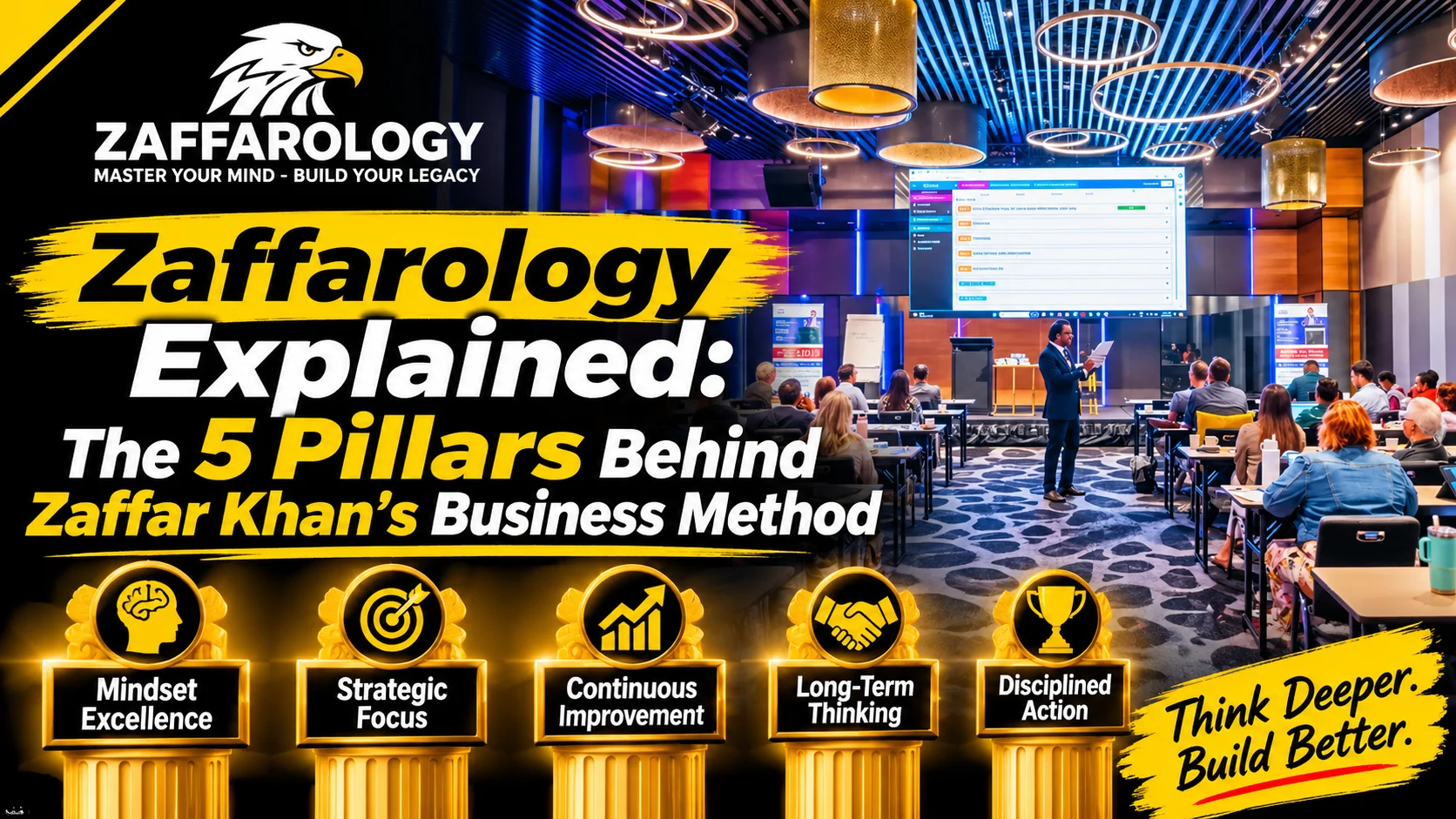
Zaffarology explained: the 5 Pillars behind Zaffar Khan’s business method

19 NOVEMBER 2026 · 6 MIN READ
Start the Year With a 90-Day Business Plan: Why January Is the Right Time to Begin
Plan a 90-day business sprint from January 2027. Learn how to use the new year fresh start, set review dates, count Queensland public holidays.